Cellulase and Xylanase for Lignocellulosic Biogas Pretreatment
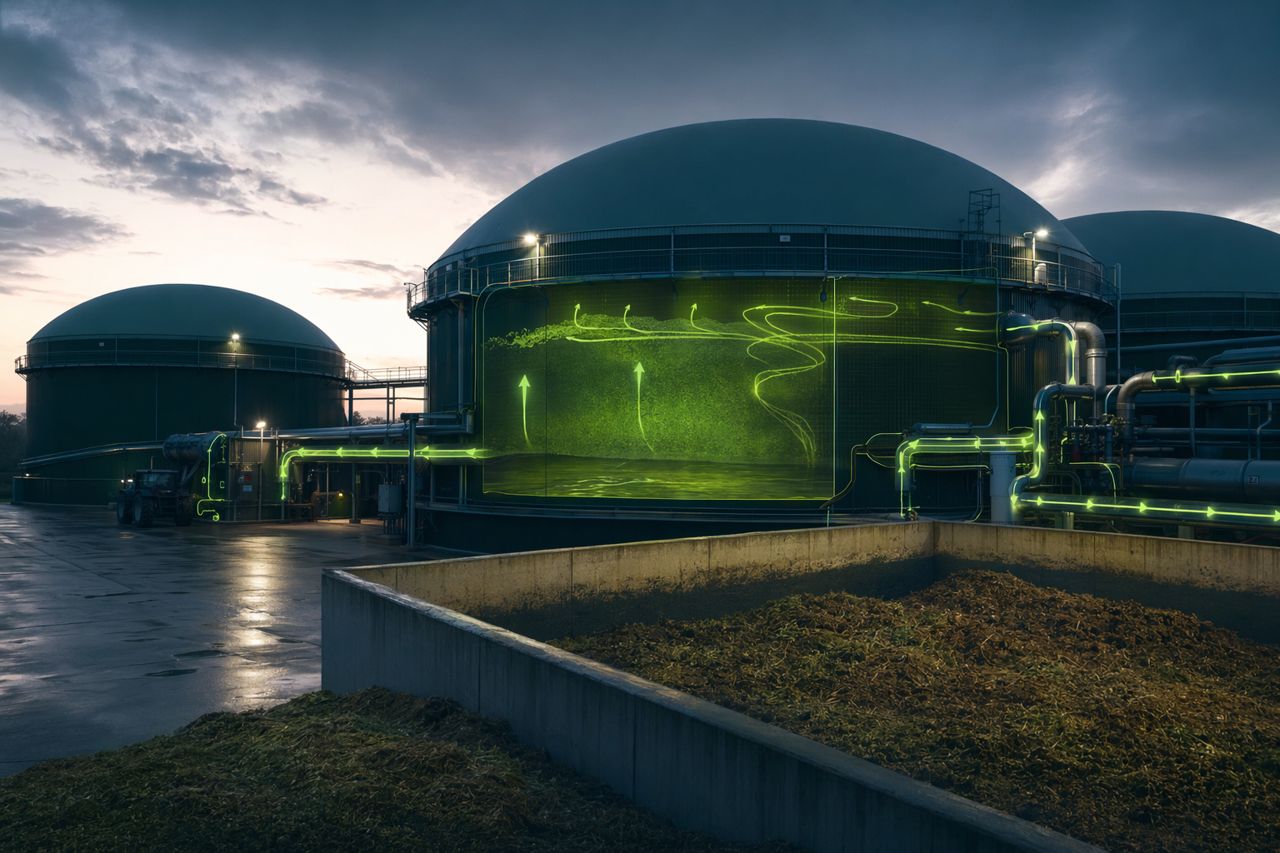
Fiber-rich feedstocks can create a hard ceiling on biogas performance. Maize silage, grass silage, straw, crop residues, manure fibers, food waste screenings, and other lignocellulosic inputs often carry cellulose and hemicellulose structures that slow hydrolysis before methanogenesis can fully benefit.
AneroShift supplies cellulase and xylanase enzyme solutions for biogas plants that need more controlled breakdown of structural carbohydrates before or during anaerobic digestion. If you are evaluating an enzyme supplier for biogas production, we help connect enzyme selection, dosing strategy, feedstock profile, and plant KPIs into a practical trial plan.
Why lignocellulosic feedstocks need targeted pretreatment
In many digesters, the bottleneck is not methane conversion alone. It is access.
Cellulose fibers and xylan-rich hemicellulose can limit how quickly soluble organics become available to the microbial community. When this breakdown is slow or inconsistent, operators may see:
- Lower-than-expected gas output from fibrous substrates
- Higher viscosity and mixing load
- Floating layers, crust risk, or uneven substrate distribution
- Longer retention pressure for the same feed volume
- Higher sensitivity to feedstock changes
- Process stress when loading rates are pushed too quickly
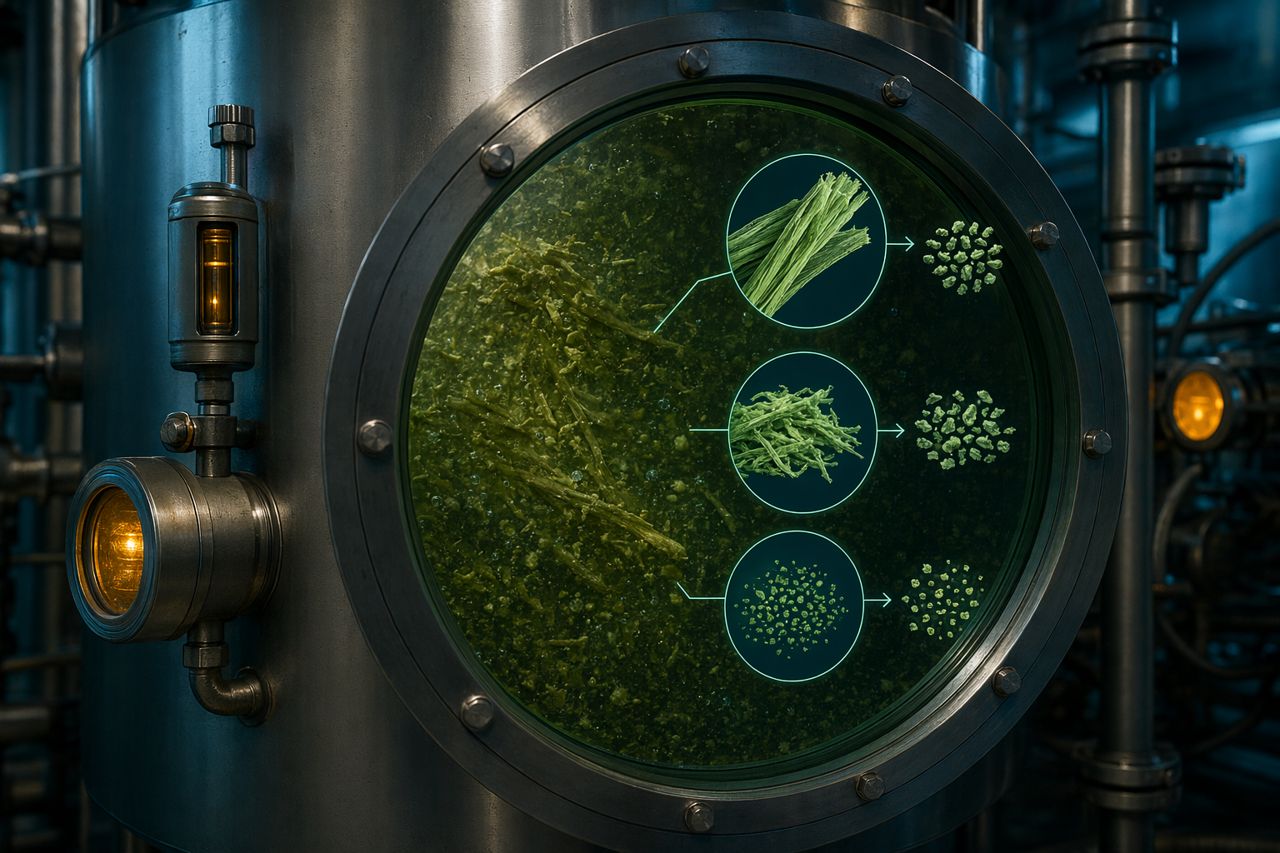
Cellulase and xylanase are used to open the carbohydrate structure and support faster hydrolysis. The goal is not to force the digester. The goal is to make more of the feedstock accessible in a controlled, measurable way.
What cellulase and xylanase do in biogas pretreatment
Cellulase: improves cellulose breakdown
Cellulase targets cellulose-rich fiber structures found in silage, straw, crop residues, manure solids, and plant-based industrial byproducts. In a biogas setting, cellulase can help reduce persistent fiber and improve access to fermentable material.
Potential operational value includes:
- Faster hydrolysis of fibrous biomass
- Improved conversion of plant solids into soluble organics
- Reduced undigested fiber carryover
- Better feedstock utilization from high-fiber inputs
- Support for stable gas production when substrate quality varies
Xylanase: targets hemicellulose and xylan-rich material
Xylanase works on xylan and related hemicellulose fractions that often surround or bind with cellulose in plant cell walls. In practice, xylanase can complement cellulase by improving structural opening and helping the substrate break down more evenly.
Potential operational value includes:
- Better access to hemicellulose-bound organics
- Improved liquefaction of crop residues and silage fibers
- Lower viscosity pressure in selected feed regimes
- More consistent hydrolysis where mixed agricultural inputs are used
- Support for digestion of grass, straw, maize, and fibrous co-substrates
Built for plant realities, not lab assumptions
AneroShift approaches enzyme supply from the operating floor outward. Biogas plants deal with changing feedstock contracts, seasonal dry matter shifts, loader variation, tank geometry, hydraulic constraints, and microbial sensitivity. Enzyme programs need to fit that reality.
We support operators and technical buyers with:
- Enzyme selection based on dominant substrate fractions
- Practical dosing and addition-point guidance
- Compatibility review with pre-tanks, mixing systems, pasteurization, and main digesters
- Trial design focused on gas uplift, VFA stability, viscosity behavior, foam observation, and retention pressure
- Scale-up planning from controlled evaluation to routine operation
Where cellulase-xylanase pretreatment fits
Cellulase and xylanase can be applied in different process locations depending on plant layout and objective.
Pre-mix or reception tank
Useful when the target is early fiber opening before the substrate enters the main digester. This can support more uniform slurry behavior and reduce the shock of difficult feedstock changes.
Hydrolysis tank or buffer tank
Suitable for plants with a dedicated pretreatment or holding stage. This gives the enzyme more contact time with lignocellulosic material before the main microbial conversion phase.
Direct digester addition
Possible where the process design favors direct integration. This should be evaluated carefully against mixing, temperature, retention profile, and the plant’s existing biological stability.
Feedstocks commonly evaluated
AneroShift cellulase-xylanase programs are most relevant when a meaningful share of the feed mix contains structural plant material.
Common evaluation targets include:
- Maize silage and grass silage
- Straw and cereal residues
- Energy crops with high fiber content
- Manure with bedding or plant fiber
- Pressed pulp and agricultural residues
- Vegetable processing residues
- Food waste streams containing plant solids
- Mixed farm and co-digestion feedstocks with variable fiber load
Operational outcomes to measure
AneroShift does not position enzymes as a blind additive. A serious plant trial should track the same indicators your team already uses to judge digester performance.
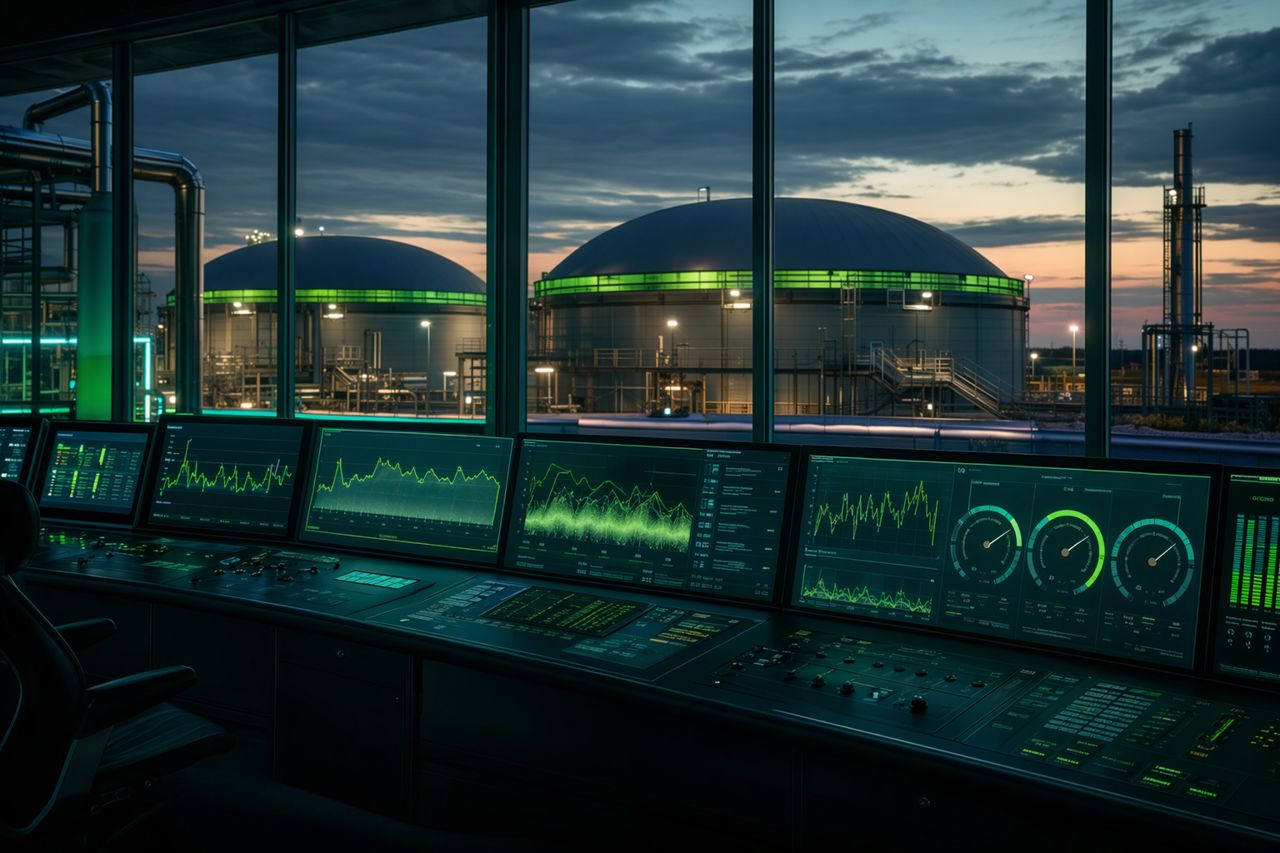
Recommended monitoring areas include:
- Biogas volume and methane concentration trend
- Volatile fatty acid stability
- Alkalinity and process buffer behavior
- Feedstock dry matter and fiber profile
- Slurry viscosity and mixing response
- Foam, crust, and floating-layer observation
- Digestate fiber carryover
- Organic loading and hydraulic retention pressure
- Parasitic load from pumping or mixing where measurable
The aim is a defensible before-and-after comparison, not a one-day spike. We help define trial boundaries so procurement, operations, and plant management can evaluate whether the enzyme program earns its place.
Trial protocol support from AneroShift
AneroShift can help structure a plant-specific evaluation with clear baselines and decision points.
A typical technical discussion covers:
- Current feedstock matrix and seasonal variation
- Existing pretreatment, mixing, and feeding setup
- Main operating constraints: gas yield, viscosity, foaming, VFA swings, or retention time
- Target enzyme blend: cellulase-focused, xylanase-focused, or combined
- Addition point and handling requirements
- Trial length and comparison window
- KPI dashboard and reporting format
- Scale-up conditions if the trial is successful
This process helps reduce guesswork. Your team can see whether faster hydrolysis translates into operational value under your actual plant conditions.
Why choose AneroShift as your enzyme supplier for biogas production
AneroShift is built for industrial biogas buyers who need stable supply, technical clarity, and practical plant support.
We focus on:
- Lignocellulosic substrate challenges
- Methane-focused performance evaluation
- Digester stability and process stress reduction
- Enzyme programs matched to plant layout
- Clear procurement and technical documentation
- Quote support for commercial-scale operation
We do not recommend an enzyme program until the feedstock and process context make sense. The right cellulase-xylanase solution depends on what you feed, where the hydrolysis constraint sits, and how your plant measures value.
Request a quote
If your biogas plant is processing fiber-rich feedstocks and you want to evaluate cellulase and xylanase pretreatment, contact AneroShift with your feedstock profile, plant capacity, current constraint, and target outcome.
Use the on-site form below to request a quote. Our team will review the application and respond with a practical supply and trial discussion.