Agricultural Waste Biogas Enzyme Guide
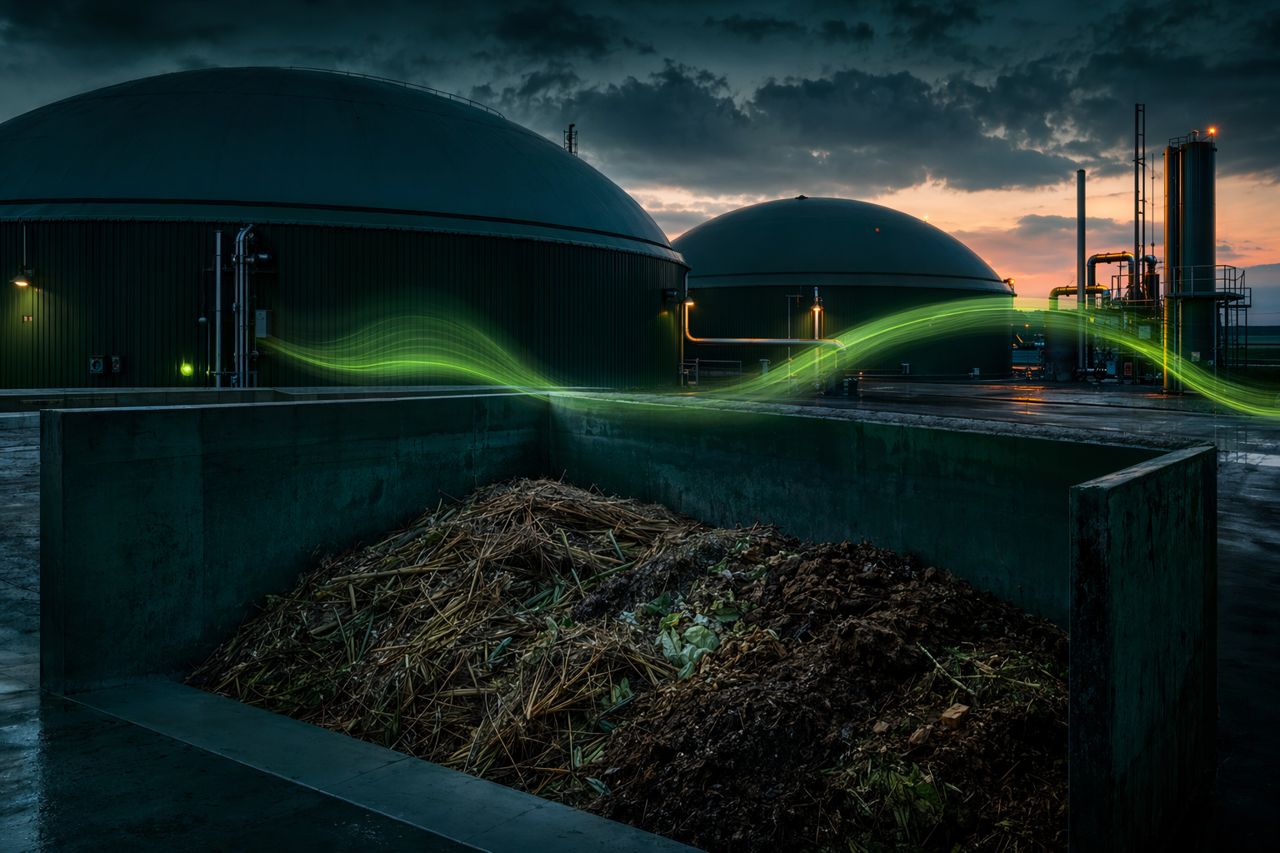
Agricultural waste can be a strong biogas feedstock, but it rarely arrives as a uniform material. Straw, husks, stalks, silage residues, manure solids, vegetable residues, and mixed crop by-products all bring changing fiber levels, particle structure, viscosity, and inhibition pressure.
AneroShift supplies enzyme programs for biogas plants that need more controlled hydrolysis from variable agricultural inputs. As an enzyme supplier for biogas production, we focus on practical operating outcomes: steadier digestion, better substrate conversion, reduced process stress, and a measurable trial path before scale-up.
Request a quote for an agricultural waste enzyme program matched to your plant conditions.
Why agricultural waste challenges biogas plants
Agricultural residues are often rich in structural carbohydrates and lignocellulosic material. In the digester, that can slow hydrolysis and create uneven release of fermentable material. The result is not always a simple drop in gas output. Operators may see a mix of symptoms:
- Slower breakdown of fibrous crop residues
- Higher mixing load from viscous or floating material
- Foam formation during feedstock changes
- Increased undigested solids in digestate
- More variable gas production across feeding cycles
- VFA movement after high-fiber or high-starch batches
- Reduced confidence when accepting new agricultural residues
The objective is not to force the digester harder. It is to make the front end of degradation more predictable so the biology receives a steadier substrate stream.
How AneroShift enzyme programs support agricultural waste digestion
AneroShift enzyme solutions are selected around the composition of the incoming feedstock and the plant’s operating target. For agricultural waste, the main focus is improving access to degradable material and accelerating the early hydrolysis steps that often limit conversion.
Faster hydrolysis of fibrous residues
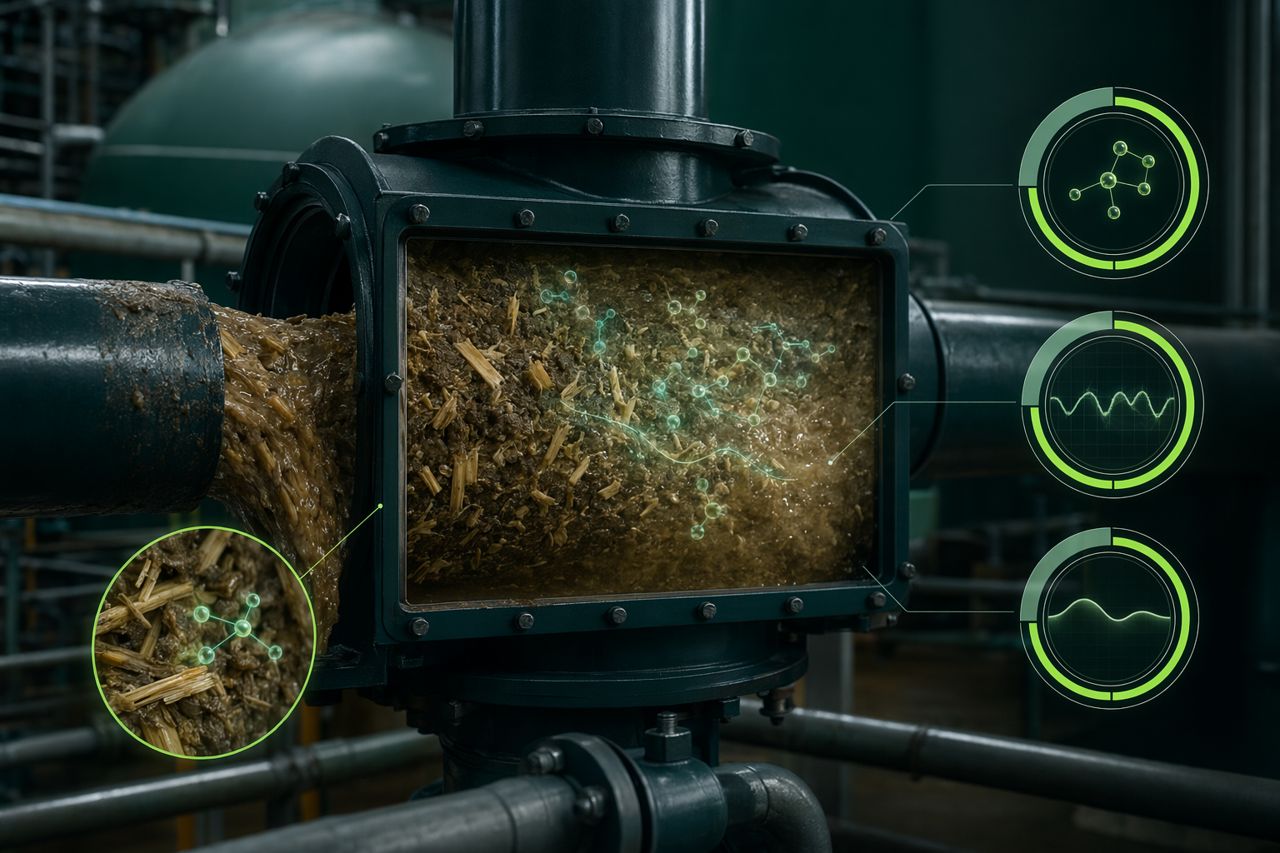
Crop residues and manure-associated fibers can resist breakdown. Enzyme support helps open substrate structure and improve conversion potential before material passes through the digester underutilized.
More stable gas production under variable feedstock
When feedstock quality shifts, the plant can experience gas swings and process stress. A controlled enzyme program can help reduce the shock of changing particle structure, dry matter behavior, and digestibility.
Better handling of viscosity and floating layers
High-fiber agricultural inputs may increase viscosity, reduce mixing efficiency, or contribute to floating material. Enzyme treatment can support smoother substrate behavior and more consistent contact between biomass and biology.
Reduced pressure during feedstock transitions
Many plants want flexibility: seasonal residues, new supplier streams, or higher shares of local agricultural by-products. AneroShift helps evaluate these changes through staged dosing and KPI tracking instead of uncontrolled process risk.
Where enzymes fit in the biogas process
Enzymes are not a substitute for good digester management. They work best when integrated with feedstock planning, retention strategy, mixing, nutrient balance, and routine monitoring.
Typical application points include:
- Feedstock reception or mixing tank
- Pre-digester slurry preparation
- Main digester feed line
- Controlled batch introduction during feedstock changes
The right application point depends on contact time, substrate consistency, dosing access, and the plant’s existing equipment. AneroShift reviews these factors before recommending a program.
Practical use cases for agricultural waste biogas enzymes
Straw, stalks, and crop residues
Fibrous residues may carry useful energy potential but break down slowly. Enzyme programs can help improve hydrolysis and reduce the amount of material leaving the process insufficiently converted.
Manure with bedding or plant solids
Manure streams containing straw, sawdust traces, crop particles, or bedding residue can increase fiber load and viscosity. AneroShift supports plants seeking steadier conversion from these mixed materials.
Vegetable and processing residues
Vegetable residues can vary in starch, fiber, moisture, and degradability. Enzyme support can help smooth feedstock variability and support more predictable gas response.
Seasonal agricultural by-products
During harvest or contract changes, plants may receive short-term feedstock opportunities. A structured enzyme trial helps operations teams assess whether the material can be accepted without destabilizing the digester.
A measurable trial protocol, not guesswork
AneroShift approaches biogas enzyme supply through a plant-aware trial structure. Before recommending routine use, we help define the baseline, dosing plan, operating window, and success criteria.
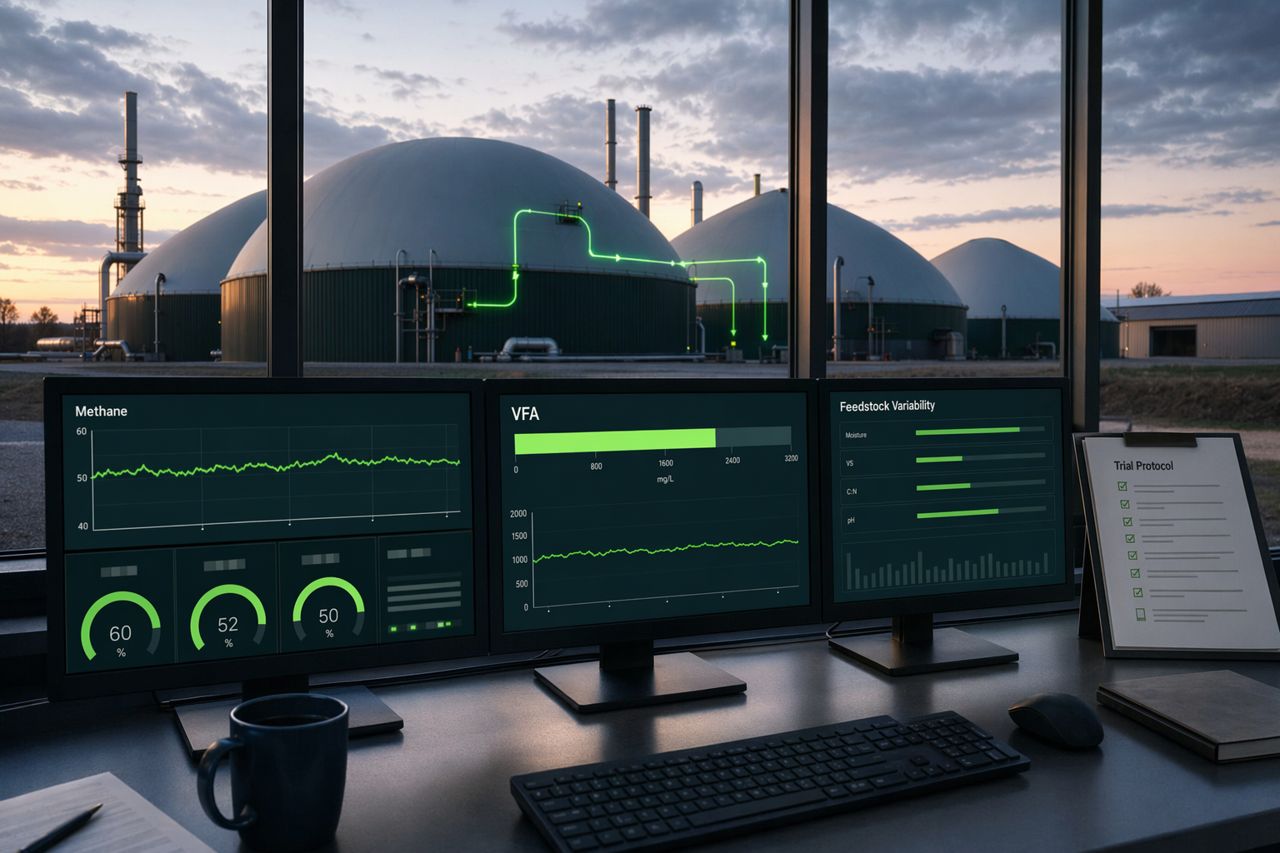
Recommended trial tracking includes:
- Daily feedstock mix and loading pattern
- Biogas and methane trend response
- VFA and alkalinity stability
- pH movement and process resilience
- Mixing behavior and viscosity observations
- Foam events and floating layer observations
- Digestate solids appearance
- Operational notes during feedstock changes
The goal is to separate real enzyme value from normal plant variation. A good trial should be long enough to reflect retention behavior and stable enough to compare against the plant’s own baseline.
What operations teams can expect from AneroShift
AneroShift works with biogas operators who need technical supply support, not generic product claims. We ask for the feedstock profile, plant configuration, operating constraints, and target outcome before proposing an enzyme program.
You can expect:
- Feedstock-specific enzyme selection
- Practical dosing guidance based on application point
- Trial planning for measurable comparison
- Support for agricultural waste variability
- Clear documentation for purchasing and operations teams
- Quote preparation for pilot, transition, or routine supply
When to request a quote
Request a quote if your plant is:
- Increasing agricultural waste share in the feedstock mix
- Processing more straw, stalks, husks, silage residue, or manure solids
- Seeing foam, viscosity, or floating layer issues after feedstock changes
- Seeking more methane-focused performance from existing agricultural inputs
- Evaluating a new seasonal or contracted residue stream
- Building a trial protocol before committing to routine enzyme use
Request a quote
Tell us about your feedstock mix, digester type, process concerns, and target outcome. AneroShift will review the application and respond with a practical enzyme supply recommendation for your biogas plant.